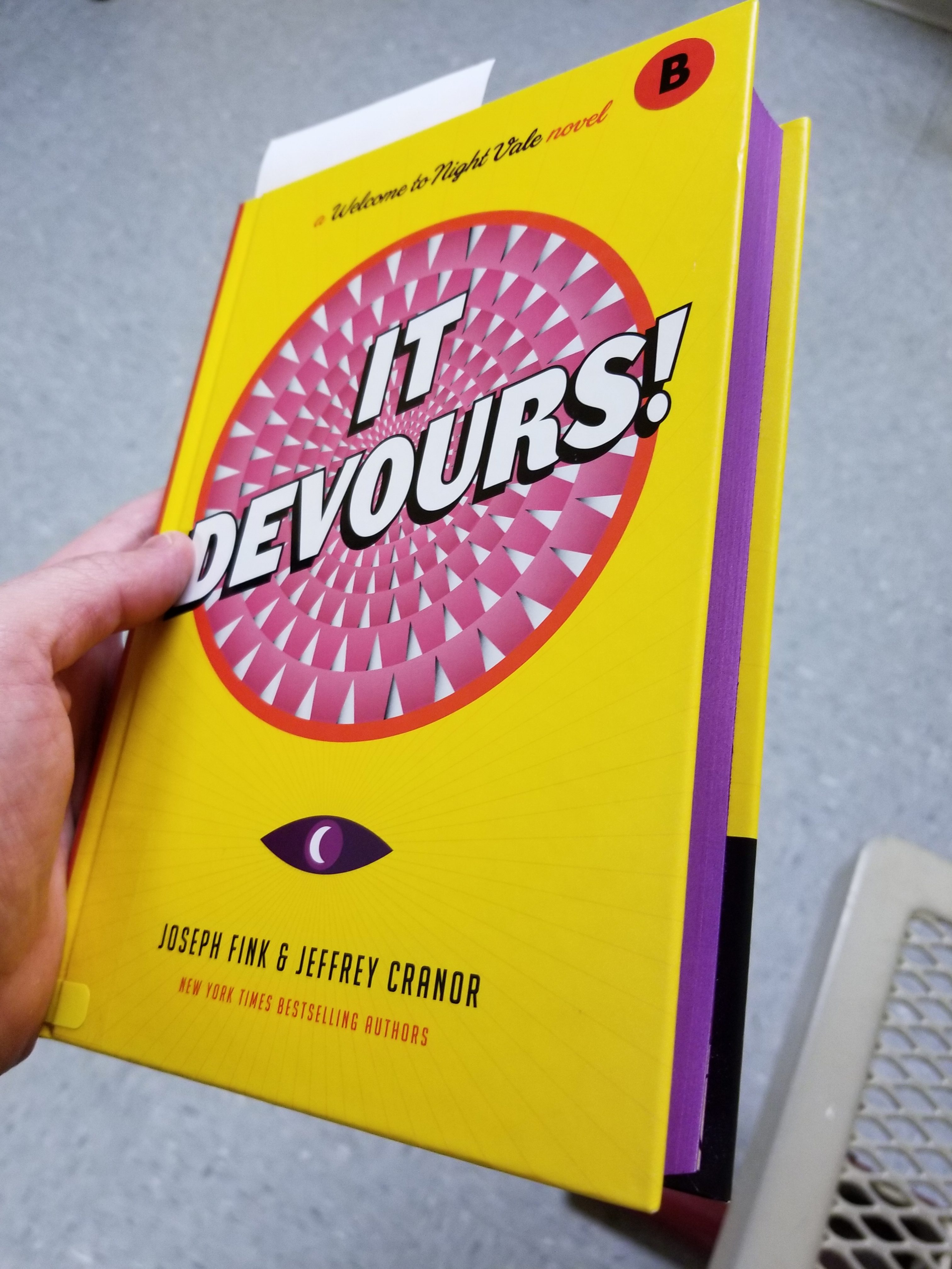
MOVIE REVIEW: The Lego Ninjago Movie

written by David Steffen

The Lego Ninjago movie is a computer animated children’s movie from Warner Bros, released in September 2017.  It is in the loosely connected series of Lego movies that include The Lego Movie and The Lego Batman Movie.  Similar to those movies, pretty much everything in the movie is made as though it were built out of Lego blocks, and though the movies generally don’t often acknowledge that they are actually toys, it occasionally does (usually for comic effect).

Ninjago Island has, for decades, been terrorized by the monstrous villain Garmadon (Justin Thoreau), who builds fanciful mechs and leads armies of fighters to take over the island.  The island’s only defense is a group of ninja heroes who pilot elemental-themed mechs to thwart Garmadon at every turn: Water Ninja (Abbi Jacobson), Ice Ninja (Zach Woods), Earth Ninja (Fred Armisen), Lightning Ninja (Kumail Nanjiani), Fire Ninja (Michael Peña), and their leader: Green Ninja (Dave Franco).  The ninja team is secretly a group of high school students trained by Master Wu (Jackie Chan), and the Green Ninja is the second-most despised person in all of Ninjago–Lloyd Garmadon, son of the villain himself.  Garmadon wins one of their battles and takes over Ninjago, and the ninja team heads off with Master Wu to begin their training to come back and finish the job.

This is a fun, action-packed movie, but I didn’t think it was as funny as the previous two, which was my main appeal to the series.  Garmadon was the highlight of most of the movie for me, had a lot of good lines.  With one exception.  There is a scene. Where the use of Master Wu’s super secret Ultimate Weapon is revealed.  And that alone is worth seeing the movie for.  I laughed until I cried.  Great moment, perfectly executed, and I am super happy I saw the movie for that scene alone.  But, you can’t go wrong with it if you’re looking for an action movie with some comedy.

DP FICTION #44B: “Still Life With Grave Juice” by Jim Moss

“This is the real thing? None of that synth-sludge?”

“Yes, sir. Direct from Earth.”

“And it’s the best you’ve got?” Quincy eyed the glass on the robowaiter’s tray. He should have ordered a bottle. He would need more to help unravel the stress of his turbulent negotiations with the Wattlars, who had rejected yet another contract. At least this outpost had an overpriced restaurant where he could run up his company’s expense account.

“Highest quality and price, I assure you. You may access my Integriport–”

“Yeah, yeah…” Quincy waved his hand, the gesture cue enough for the robowaiter to spit out a coaster which landed on the table with a soft plop. In a ballet of hydraulics, the robowaiter plucked the glass off the tray and set it before Quincy with the exaggerated grace of a suitor presenting a rose.

“Will that be all, sir?”

“You know, on Earth, they pop the cork in front of the patron, so it can be inspected for dryness, and they show the bottle so that–”

“You requested a glass, not an entire bottle,” the robowaiter spun its upper torso away from Quincy and sped off. Quincy held up the glass by the stem, examining its deep burgundy contents by the overhead light. He brought it down below his nose and inhaled.

“Cannibal.”

That word, that accent, the derisive tone — Quincy knew it referred to him. It made the scent of fresh blackberries he just inhaled turn rancid. He turned his head and expelled his breath away from the glass. There, seated the next table over were a pair of Arthruds. Common in this sector, especially at spaceports, they enjoyed a reputation as damn good mechanics despite being an insufferable race of know-it-alls. To Quincy they looked like a cross between an armadillo and a giant bipedal lobster, with outer bodies covered in segmented plates and a second set of arms beneath the first. The adult and child were eating what appeared to be shards of cardboard soaked in neon anti-freeze. The child could not be more than seven molts old. Both bobbed, jostling their plates, which made squeaky noises like balloons being rubbed together. They did this when laughing, or passing judgment, or both. Quincy rolled his eyes, turned away, swirled the glass and inhaled again. He tipped a sip and rolled it around his mouth with his tongue. Yes, yes, blackberries, currant, a touch of clover, anise, oak…

“What is he drinking?” asked the child.

“I believe it is called ‘wine.’ It is a death drink.”

“Will we get to see the Earther die?”

“No.” Squeaky balloon sounds sputtered out of the adult’s body plates. “I meant death as in dead. Wine is made from the dead. As I said, they are cannibals.”

“Should we leave?”

“No, don’t worry. They only eat their own.”

“If another Earther comes along, will they try to eat each other?” The child looked around the restaurant. Quincy moved his wine aside and turned to face the Arthruds. It was one thing for two adults to spout their ignorance, but quite another for an adult to imbue such bigotry on a child.

“Excuse me, I’m sorry, I couldn’t help overhearing…” Quincy stared into the adult’s face trying to lock onto the creature’s three eyes with his own two. “Perhaps you received some faulty information. Earth people are not cannibals.”

“It is well known throughout the galaxy that yours is a cannibalistic race.” The adult met Quincy’s stare, crossing his midarms across his midsection.

“You’re wrong. I don’t know where you heard this propaganda, but it’s false and insulting.”

“On your planet, do you not bury your dead?”

“We bury them, but we don’t eat them.”

The adult raised a plated brow above its top eye and turned to face the child.

“Earthers bury their dead in the ground in graveyards where the bodies decompose. They sow their strange plant life into these yards. The plants send their roots into the soil and suck in the fragments of the dead. Then the plant blooms and bears fruit. Fruit containing bits of the dead. Fruit they then eat.”

“Where are you getting this nonsense? We don’t plant fruit trees in graveyards.” Quincy could feel a vein in his forehead throb. The adult pointed at the glass of wine with the spindly third digit of his upper right claw.

“Is not your ‘wine’ made of grave juice?”

“Ahh! Here’s your confusion. Wine is made from grapes not graves. Grapes are fruit grown in vineyards, not graveyards.” Quincy reached for his glass. The adult raised two plated brows and leaned towards the child.

“The problem, Dewlis, is that Earthers have many words in their languages that mean the same thing. They use these to confuse others about what things really are. When you point out their error, they complain that it was a mis-understanding or a mis-interpretation. Beware when an Earther says ‘mis’.” The adult turned back, his eyes drawn to the vein now bulging on Quincy’s forehead.

“You are not the authority on Earth languages, Mis-ter. What is your name?”

“Spureb. And yours?”

“Quincy. And I’m going to prove you wrong.” Quincy threw his arm out blocking the robowaiter as it attempted to zip between tables. The waiter’s upper torso spun around twice before it stopped to face him.

“Yes, sir?”

“Tell us, waiter,” Quincy held up the wineglass. “What is wine made from?”

“Grapes.”

“And where does this wine come from?”

“Earth, France, the Bordeaux region.”

“St. Emillion? Pomerol?” Quincy took a sip.

“No sir, Graves.” The robowaiter spun back and zipped away.

“Bah Za!” Spureb pointed two digits and a folded claw at Quincy.

“No! Listen, that’s just the name of the region. The waiter mispronounced it. It’s pronounced ‘grahv’ with a short ‘a’. A different vowel sound. It’s French for gravel. It’s the name of a French wine growing region. It has nothing to do with graves. Don’t mistake a vineyard for graveyard.”

“The Earther said ‘mis’ twice!” Dewlis smiled at his father. They bopped in amusement, squeaky laughter reverberating like an orgy of balloon animals.

“Just stop and listen!” Quincy pounded the table. “A vineyard is a yard where grapes grow, a graveyard is a–”

“They are both ‘yards’ then, a measured plot of land, yes?” Spureb created a square using his four arms.

“Yes, but—”

“Yet you pronounce the ‘yard’ in vineyard as ‘yerd’. A different vowel sound. Is this a mispronunciation?”

“Uh… no, because, uh…”

“So yard is a word pronounced two ways, but means the same thing.” Dewlis said. “Like ‘grahv’ and ‘grave’.”

“No! They are two different things” Quincy threw his hands up, then grabbed his wineglass and poured a gulp into his mouth. “You know, even if a vineyard was planted on top of a dead body, we don’t eat dead flesh directly, so we’re not cannibals.”

“Suppose they are two different plots of land, as you say.” Spureb sat back in his chair and clacked the digits of his upper claws together. “You still contaminate your soil with your dead. If an insect eats a leaf from a plant in your ‘graveyard’ then flies into a ‘vineyard’ and dies in the soil and the vin plants eat the soil with the dead insect, then you eat the fruit of vin plants – you have eaten pieces of your dead.”

“No. Because what I’ve really eaten is molecular compounds. Someone dies, they’re buried, they decay. Maybe a bug eats some of it. When the bug dies it decays into simpler molecules, water, proteins, amino acids. So a plant uses these nutrients and produces fruit that someone may eat. So what? Everything gets recycled. Broken down and recycled. It’s the nature of the universe.”

“That may be the nature of your planet, but not the universe.”

“Oh yeah? What do you do with your dead?”

“Our dead become art. That is the proper way to honor them.”

“Art?”

“My great ahdmah won the Op Culbet for her work on great pahdah,” said Dewlis.

“He’s hanging in the Brachalach, our finest museum.” Spureb tapped his claw on his chest plate. “And what a stunning piece he is. Great ahdmah bent his spine into a semi-circle and beneath this, draped the flesh of his pale underbelly. Over this setting moon motif, she sprinkled the glittering shards of his shattered neck plate. His top abdomen is broken open and from the center, triangular strips of muscle are strung outwards in all directions like a blazer blossom. Here, his left claw, stained in ochre bile, is curled in a fetal ball. The fourth digit, bent impossibly backwards, protrudes like a stamen. And no matter where you move to look, that digit seems to follow you. His head top hangs upside down strung from a series of tendons like a rain basket that… Bah! I’m talking to a flabedah!” Spureb threw three of his arms up in the air.

“A flabedah?”

“That’s Arthruder for uh… you have no word in your language. It means someone who does not understand or appreciate what art does for a soul.”

“Uh huh.”

“Ah! I forget. You Earthers believe the soul leaves the body after the body is no longer self-animating.” Spureb flailed his four arms and swayed back and forth.

“That’s silly!” Dewlis squeaked a series of chuckles. “Soul is made of body. How can soul leave body? Silly!”

“Dewlis, this is what Earthers believe.” Spureb cooed in sing-song. “We should not ridicule their beliefs.”

“Ha!” Quincy plunked his glass on the coaster. “You cut up bodies to make rain buckets. So you chop up souls.”

“The soul may be divided, but it is not separated. It is recombined with the body into a more appealing form of art. Most souls find it agreeable.”

“And how do you know they find it agreeable?”

“In the silent hours if we stand before our ancestors and relax our minds we can hear their voices whisper to us.”

“Zul Ahdmah whispers to me,” said Dewlis.

“Yes, she tells you to stop slumping so much.”

“No, she tells me I am entitled to extra Kerzyhisses, for I will molt large.”

“She does not. You are only imagining that.”

“Yeah, you creatures molt,” said Quincy. “You drop off chunks of body parts. What happens to the soul of those parts? You couldn’t possibly save every single— “

“We re-ingest them. That’s what we’re eating right now.” Spureb speared a boiled body plate with his fork. “We eat only our own souls, not others’, thank you.”

“I don’t like the taste of my lower abdomen,” said Dewlis.

“Well, you better eat it, or you’ll be incomplete and never get displayed in a good museum.”

“What do you do when your art decays?” Quincy tossed a gulp of wine into his mouth.

“It does not decay. It is all how-you-say — varnished. We are not primitives that allow our dead to decay into pieces that end up in the food supply and get mixed in with other souls and eaten and—”

“Is that why his abdomen is so large?” Dewlis pointed his claw at Quincy’s belly. Quincy silently cursed the station’s greater-than-earth gravity, which made him heavier, compressed his breath and pulled his belly downwards, causing him look flabbier than he really was.

“Yes,” said Spureb. “That is where they collect. No soul, even a piece of soul, wants to be expelled as waste.”

“Alright, look, my… stoutness has nothing to do with souls in my body. Extra weight is caused by fat cells that accumulate because… Look, it’s not souls, OK?” Quincy’s grip tightened on the glass.

“You bury your dead in the ground, your plant life eats from this ground, breaking up souls and—”

“Your information is ancient. Burial is hardly done on our planet anymore. Real estate is too expensive. It’s more common that we cremate our dead.” Quincy twirled the wineglass by its stem. He felt tingly; the alcohol must be kicking in. He sat back and sighed, expecting another round of squeaks.

“Cremate?” Dewlis turned to his father.

“Cream is a white goo.” Spureb’s face plates shifted out of symmetry. “Earthers whip it up and serve it on their desserts.”

“No! That’s not what it is!” Quincy bolted upright.

“Cream-ate… ’Ate’ means that they’ve eaten it!”

“No, no, no! In cremation the body is burned into ashes.”

“What do you do with the ashes?” Spureb’s voice was low, his neck sunk into his upper torso.

“Scatter them in the wind.” Quincy turned away, took a gulp of wine, and clenched his fists expecting another round of squeaks. But the Arthruds were silent, the only sound, the grinding of Quincy’s teeth. Quincy turned back to find Spureb staring at him, eye plates askew, breathing hole frozen open. Dewlis turned to his father.

“Pahdah?”

“Millions of Earthers die every year on your planet.” Spureb’s eye plates pinched together and his ears recoiled into their sockets. He held his upper claws close to his chest. “Your atmosphere is full of corpse dust. Your populace breathes in burned up pieces of souls!”

“That’s enough!” Quincy pounded his arm on the table and rose from his seat. “There are no…” He paused to catch his breath. “Souls in… dust!”

“Pahdah, the Earther is breathing funny.”

“He appears to be experiencing withdrawal. Not enough soul dust in this atmosphere for his cannibal addiction. Perhaps the grave juice isn’t enough.”

“You… No… Uh…” Quincy sputtered, struggling for balance, the tingling in his arm growing painful.

“He just spit dead Earther juice at my head!”

“Move back, Dewlis. I don’t understand what is happening. He may have angered the souls he has consumed by denying their existence.”

“You puchh… you achh…” Quincy grabbed at the table with his right arm.

“Look how red he glows.” Dewlis stared at Quincy’s face.

“He is blushing. Earthers do this when they have embarrassed themselves.” Spureb leaned in to whisper to Dewlis. “It may not be proper for us to view his shame, let us look away.”

Spureb and Dewlis turned their backs on Quincy. They heard a thud and waited a couple of minutes to allow Quincy’s fit of shame to pass before turning back.

***

“And he died, right there.”

“How awful,” said Kerlew, a lovely female Arthrud that had stopped by Spureb’s garage to pick up a replacement part for a centrifuge. Spureb led her on a tour, casually watching her shuffle along the corridor and smiling as she eyed his collection of shiny metal plates and polished tubes.

“The staff tried to reset-animate him by pulling his merry-cardio muscle, but they were so incompetent, they pushed instead of pulled. Apparently, his heart was attacked by his massive coronary gland. ”

“Such strange physiology.”

“Terribly awkward situation. Nearest relative some twenty light-years away, employer in debt due to careless expense management, neither willing to pay for transport. And you know Earthers – they would have just expelled him into space.”

“Barbaric.”

“And despite his hubris and ignorance, he was amusing and we did feel sorry for him. We told the authorities we’d take him, and so, there he is.” Spureb waved his two left arms towards a corner in his garage gallery.

“Aja! Fantastic. Do their legs really twist like that?”

“No, that’s Spiasoc’s explication. He was able to make the tissue flexible through plastination. A preservation used on Earth during a brief enlightened period when–”

“You got Spiasoc?” Kerlew’s eyes widened with interest.

“Yes.” Spureb crossed his four arms over his torso and arched his back to raise his top segment just a little. “Spiasoc is quite eager to break convention with work on other xenophylum.” Spureb turned to look at Quincy and smiled.

Quincy’s body sat on a pedestal made of his leg bones. The flesh of his boneless legs, peeled in long ribbons and twined with muscle and tendon, spiraled in a double helix down to the floor. Thin slices of his brain, stained green, were attached along these vines; the flat sides of each angled upward, seeking light. The skin of his mid-section was shorn away. His intestines, flattened, dyed brown and cut into three by eight slats were arranged to form his torso into a barrel. Deflated lungs protruded from his back in a V spread, mottled fairy wings insufficient for his bulk. His arms burst out between slats, left switched for right with elbows bent backwards. One hand reached towards barrel bottom for a dangling spigot, while the other held up the aorta stem of a goblet carved from his heart. Quincy’s neck stretched out from barrel top, his crimson colored Adam’s apple rupturing through the middle. Above his furrowed brow, the top of his head was sliced off and thrown back like a jar lid. In the open skull, a helter-skelter tower built of brain matter cubes rose toward the ceiling, looking as if it might collapse at the faintest wayward breath. Quincy’s dead eyes stared at the goblet tipped towards his mouth. The pureed burgundy of his liver spilled over the goblet’s rim forming a long droplet that hung frozen in mid air. His tongue, stretched through parted blue lips, strained to reach the glistening drop, but only succeeded in tightening the knot at its center.

“Such an honor for the Earther,” said Kerlew.

“He finds it agreeable.”


© 2018 by Jim Moss


Jim Moss is a videographer and a playwright. His plays have been produced Off-Broadway in New York, and in theatres in Miami, Tampa, Orlando, Pittsburgh, Chicago, and London. His play, Tagged, was a winner of the 2018 British Theatre Challenge. Still Life With Grave Juice is his first published short story.


If you enjoyed the story you might also want to visit our Support Page, or read the other story offerings.

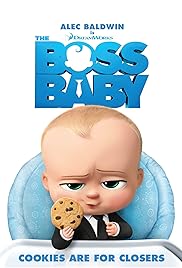
MOVIE REVIEW: The Boss Baby

written by David Steffen

The Boss Baby is a 2017 computer animated comedy/action film produced by Dreamworks Animation, released in March 2017.

Where do babies come from?  Nope, not where you think.  They come from a factory, (shown in the opening credits of the movie), an assembly line producing seemingly endless babies.  Most of them fit all of the standard characteristics expected of babies, and those babies are all shipped off to live with familes.  But occasionally one comes down the line that just doesn’t fit the mold, doesn’t do what’s expected of babies such as laughing when tickled, and those babies… are management material.

Seven-year-old Tim Templeton (Miles Bakshi, with adult version narrator as Toby Maguire) is the only kid of two busy but loving parents, and he doesn’t want anything to change.  But one day he sees a baby wearing a business suit exiting a taxi outside the house, and when he runs downstairs to see what’s going on, his parents announce he has a new baby brother.  Something weird is going on here, at first it seems like a normal baby, as disrupting as that can be on its own, but when other babies visit for a playdate Tim catches the baby leading a business meeting and the jig is up.  The baby is known only as Boss Baby (Alec Baldwin) and he works for a company called Baby Corp who give their employees a special formula that keeps that in the shape of a baby but with the mind of a human as long as they keep drinking it regularly.  Boss Baby has been assigned to the Templeton family because Mr. (Jimmy Kimmel) and Mrs. Templeton (Lisa Kudrow) work for Puppy Co, Boss Corp’s biggest competitor (with “love” being  the currency the two companies run on, apparently?).  If Tim wants to get his house back to normal, he’s got to help Boss Baby complete his mission so that he can be called back to the corporation.

I can see why this would be a hit with kids.  I realize I’m not the demographic this was aimed at, but, well, if you don’t enjoy overexamining children’s entertainment, you may as well stop reading now.  For what it’s worth, I love a lot of kid’s movies, and when it comes to movies in general I am not generally a very harsh judge; there are many kids movies I love to itty-bitty pieces.  This was an interesting idea, if rather convoluted and based on patchy worldbuilding (where does Baby Corp’s money come from?).  I found Boss Baby more than a little bit annoying, in large part because he is exactly the model of an irritating stereotypical middle management type that doesn’t care about people and just wants to elevate his status in the company.  This made him very hard to relate to.  Not that the viewer was supposedly to relate to Boss Baby, but while it is a bit funny to have a baby spouting middle management aphorisms, I didn’t think it was enough to build a feature length film from.

Tim was much more relatable (purposefully so) but his entire fight just seemed futile to me, perhaps because I saw the inciting incident as largely metaphorical–it seems like he’s making up an elaborate fantasy world in order to justify the new disruption to his life, but, I hate to break it to you kid, if your parents have a baby brother you can’t just make him go away by completing a quest.  The movie was about halfway over before I was reasonably convinced that any of this was actually happening and not metaphorical.  This was confused more by some of the ways the movie showed briefly the parent’s point of view, especially in a dangerous high speed toy car chase scene in the back yard where when we see it from Tim’s point of view, but from the parents the baby is barely moving in his pedal car–if that was apparently incredibly exaggerated, then what else was too?

I love a lot

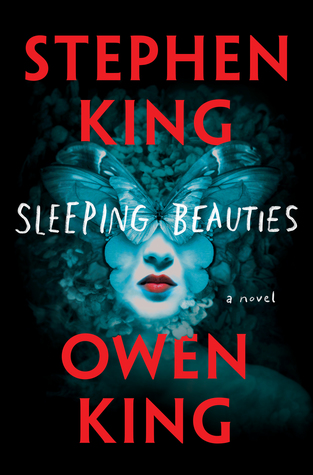
BOOK REVIEW: Sleeping Beauties by Stephen King and Owen King

written by David Steffen

34466922Sleeping Beauties is a drama/fantasy/action novel written by Stephen King and Owen King published in September 2017 by Scribner.

A mysterious condition hits the whole planet in an instant–if a woman falls asleep, threads of what appear to be fungus quickly envelop her, forming a sort of cocoon.  She continues to live inside the cocoon if left undisturbed.  If the cocoon is broken, she will wake up and react violently like a rabid animal.  Meanwhile, in the Appalachian town of Dooling, a mysterious stranger who calls herself Eve who is arrested after violently killing a man with apparently superhuman strength.  There’s no end in sight for the condition that affects only women–the women who are still awake try desperately to stay that way, some of the men left behind are ready to take desperate measures of one kind or another, and all hell is going to break loose.  People find out that Eve can sleep without going into a cocoon, and they become violently desperate to find out why.  Clint Norcross, the prison psychologist, husband of the sheriff, has a violent past from his juvenile days that he keeps to himself, even from his wife, and he takes it upon himself to protect as many women as he can, including Evie.

I like the premise of the book.  It was enough for me to decide to read the book, and I was interested enough in it to want to stick through it to the end.  But it took effort to stick with it.  The biggest reason was that the book had, in my opinion, major pacing issues. And also a too-large cast without, in my opinion, any particular reason to root for anyone.  Ensemble casts are one of Stephen King’s major skills, many of his best books have ensemble casts: It, Needful Things, The Stand.  But those books were very good at getting me emotionally invested in most or all of the characters, understanding their strengths and weaknesses so that by the end I’m rooting for the outcome.  I did not get that from Sleeping Beauties.  Since the inciting incident isn’t introduced in that first 100 pages, the main purpose of that space must be to invest me in the characters, but I felt like it focused almost entirely on the negative in each person’s personality–this person treats this other person badly in various respects but never makes them feel well-rounded.

The Eve plotline and the cocoons plotline, while they are connected, felt like they were really two separate stories, the stories of a supernatural killer and the story of this condition the women have.  Part of the reason I kept reading is that I wanted to find out more about that connection but I felt like what I got was just vague handwaving.

The themes of the book, about the relationship between men and women and how they treat each other and how they behave, could’ve been great.  But I felt that they relied more on caricatures than on reality, and never managed to be as profound as they seemed to be meant to be.

I feel like this book could’ve been really really good with the existing story, if it were 150-200 pages, just cut out that first 100-page segment and got that characterization in alongside the inciting action and things happening, and it could’ve been an incredible book.  As it is, I was interested enough in the end to read the end, but afterward I didn’t think the payoff of reading was worth the time it took to read.

More on the pacing issues, that might be too spoilerish:
The “inciting” action of local women being overtaken by the cocoons didn’t happen until past page 100.  Usually for the purpose of reviews I try to only discuss what happens within the first 100 pages or so but, there wouldn’t be much of a review if I couldn’t even mention the cocoons. The next 100 pages are spent seeing the same thing happen over and over again as women succumb to the cocoons one after another, which has to be told anew for each point of view since each person is not familiar with it.  And then most of the book is a long slow climb to the final confrontation.

DP FICTION #44A: “Pumpkin and Glass” by Sean R. Robinson

I sit on the park bench and try to forget the cold. This was easier in springtime, when there was more day light and it wasn’t as cold. I forgot my jacket this morning and as the city lights turn on one by one, the temperature drops. I miss my coat, with its thick-padded elbows.

But I cannot go home.

I do not know where home is.

I am dancing a dance that begins each morning, and ends when the clock strikes midnight. By then, he will be asleep and whatever is broken will be broken and I will not watch my Prince Charming shatter anything else that I loved.

The park is quiet, at least. There are Christmas lights strung up, and there’s enough light to see by. I don’t have knitting to keep my hands busy. I do not have my paints or my canvas. I do not have my sweet Pumpkin to sit on the bench beside me and lay her drooly dog-head into my lap. She can’t keep me warm any more.

It’s all gone. Lost. Like a slipper at midnight and the years that follow after, chasing themselves until I’m an old woman with hands that hurt as the nights get longer, without a coat to keep me warm, afraid to go home until the clock strikes twelve.

The phone in my purse rings. It’s him, and there is nothing that I can say to him. I let it go, and pull myself up from the bench. My knees ache as much as my hands do, but there are still hours until I can sleep. There are floors to wash at home, but no furniture. Not for a long time. There are shelves to polish, but my pictures, my teacups, my little knickknacks are gone.

He’s sold them, or thrown them away, or sent them to wherever the precious things go when the clock strikes midnight and you’ve been too busy dancing out the starlight and don’t realize that your prince has been breaking all the glass slippers he can find.

I stopped answering the phone the night he called me to say that he had taken Pumpkin to the hospital. My sweet Pumpkin, who licked my face when she was a puppy and showed her tummy when she was being naughty. I could never be mad at her, not with her tongue lolling out. Not when she’d filled the emptiness that grew in the house.

“She’s dead,” he’d said.

“They’re gone,” he’d said of the pictures. Our wedding pictures. Old photographs of my mother, my father. Pictures of us at the beach and Polaroids from college.

“Sold,” he’d said. The rocking chair he bought me when we’d been married thirty years. The grandfather clock that his Opa had brought from Germany. The plates that had sat, unused, in my hope chest, bought with the money I’d saved babysitting for the neighbors as a little girl.

There are tears in my eyes.

I find a seat in the coffee shop. It’s open all night and the girl behind the counter doesn’t give me a second glance. She has thick red dreadlocks, a piercing through her nose, and her eyes on her cell phone. She does not look up as I settle in. It’s not quite ten o’clock and the little café is busy. There are couples, bundled with thick coats, smiling at each other.

There is not enough money in my purse for a biscotti. He cancelled the credit cards and I am not allowed to have more than what I am given, more than what he thinks I have earned.

I miss my Pumpkin.

“There are mice in the walls,” he’d said. I sat on my rocking chair and laughed.

“Don’t be silly,” I’d said, sipping my bedtime tea. “There’s nothing in the walls, Mike.”

“There are, Hazel,” he’d said.

“And I suppose they make me dresses while we’re sleeping.” I laughed again and reached forward to place my hand on top of his. We had done it a hundred, a thousand, times. But for the first time, since that awkward first moment when we were still he-and-I, he pulled away. He pulled away from me and stared at my face as though I were some nameless step-sister and not his wife.

It is warm inside. The seat is more comfortable than the park bench, and the music playing from the speakers is a gentle waltz. It reminds me of the first time I met my husband, when the radio played the waltz and Betty Ann Lamontagne’s party had been dancing for hours. The sound from the speakers lulls me, and my eyes close. When they open, the café is empty and the music is still soft.

A biscotti sits on a plastic plate, on the table in front of me. There is a napkin folded underneath it.

The girl with red dread-locks is sitting across from me, a leg tucked up under her. The phone is gone, but she is cradling a steaming mug in her hands.

“Try it,” she says, gesturing to the plate with her chin. “It’s pumpkin. And organic. Gluten free. You name it.”

“I can’t,” I say. There is just money in my pocket book for a train ride home. Not enough for cookies, unless I want to start scrubbing the café floors.

“On the house,” she says.

“I really can’t,” I say. No matter how much I want to. I would like something nice and sweet. I would like a cup of tea and my rocking chair and the man who was my husband. Who had been my home before my home went away.

The girl says nothing, but she takes a long sip from her cup.

She smiles when I pick the plate up off the table, lift the biscotti, and bite into it. I can’t let it go to waste.

When I’ve eaten every speck of the cookie and the taste of pumpkin—unlike any other taste in the world, and my favorite—is gone from my tongue, she is still smiling.

“Looks like you needed that.”

“Thank you,” I say. I’d made treats for my sweet Pumpkin, once. Baked them in the oven and fed them to her one at a time. Her muzzle had just started to gray.

And she is gone and the phone in my purse rings again. And again I do not answer it.

“I have one of those too,” she says.

“It was really kind of you.”

“I meant the crazy ex,” she says as she stands, clears away the plate, and sits back down across from me.

I touch my wedding ring, a thin band of gold, unthinking.

“Crazy husband then,” she says. “I don’t have one of those.”

I should tell her that he isn’t crazy. That work has been busy and he has lost a few important accounts. It’s not his fault that things have gotten bad. That he thinks my paints attract mice, and that my china hides rats. That it’s not his fault that there are tears in my eyes again.

I tell her the truth. The first truth I could say to anyone other than myself, or to Pumpkin.

“The last time I answered his phone call, he told me that he had taken Pumpkin to the hospital and that she was dead,” I say. “She was old, but she wasn’t sick. She would sit with me on the park bench when I couldn’t go home yet and would curl up beside me after he said we couldn’t keep the bed, and we couldn’t put the heat on, because it would encourage the mice.”

She sets her tea down and before I can say anything else, let any more secrets from my mouth, she is sitting beside me and has her arms wrapped around me. I can’t remember the last time someone has hugged me.

“She must have been so scared,” I sob, into the strange girl’s shoulder. But she holds me tighter and smells like cookies. “She must have been so scared without me there. If I’d been there he wouldn’t—he wouldn’t have…”

When I have finished crying and the girl has brought me a hand-full of rough paper napkins, I look at the time.

“Thank you,” I say. “I don’t usually do this sort of thing.”

“It’s alright,” she says.

“It wasn’t always like this. He wasn’t always like this. I left my dancing shoes at the party where we met. He found out where I lived and brought them back to me.”

But the girl with red dreadlocks isn’t paying attention. She is looking at the clock, as the arms move together at the top.

“It’s midnight,” she says to me. “Make a wish.”

“Thank you,” I say, not understanding the strange girl. I can’t tell her my wishes anyway. “I’ll pay you back as soon as I can.”

“No,” she says. “That’s not your wish, Hazel.”

I did not tell her my name.

“That pumpkin season lasted year round,” I say, pulling my purse close to me. There is enough strangeness at home without more at the coffee shop.

She’s still watching me. She smiles. “I’m kind of new at this. You’ve got until the clock is done striking twelve. Make your real wish.”

But my hands are on the door to the shop.

“I wish home was waiting for me,” I say, stopping long enough to brace myself for the cold. I do not have my jacket or my dog, and have only just enough money to get home. I wish so much that home is waiting for me, not the empty lack of it.

When the last train drops me off at the station, and I walk the last block to where my husband and I had made our home, I take a deep breath and prepare myself. He will be asleep, it is midnight. It will be enough that I do not have to speak to him until dawn, and then I can find a way to not come back.

The lights are on, which is strange.

Stranger still is that when I turn the knob, there is warm air on the other side. There is a frame on the wall, and inside the frame is a watercolor I did when I was sixteen. A watercolor that had not been there when I left this morning. A watercolor that had gone missing months ago, because it would hide the mice in the walls.

“Mike?” I say as I step forward and shut the door behind me. My china cabinet is full. But my husband’s grandfather clock is not beside it. The bookshelves are full again and when I step into the kitchen, I cannot speak above a whisper.

“Mike?” I rub my hands together, and for the first time since I was married, I can feel bare skin on my left hand. My wedding band is gone.

There is a plate of biscotti on the table, and as I touch the plate, I hear a noise I have not heard outside of my memory for months. I turn and my dog—my Pumpkin is sitting, smiling. Her stumpy tail wagging. Welcoming me home.


© 2018 by Sean R. Robinson


Author’s note: This story is part of a series I call “Laundramat Fairy Tales” mashing up real-life with Once Upon a Time. This was inspired by a quote from the site Humans of New York. That, coupled with the experience of growing up with my grandparents (though, thankfully, there were no mice in the walls).


Sean Robinson is an author of Science Fiction and Fantasy. He has been a professional spelunker, fire-breather, has taught horseback riding, and whip making. After almost a decade working with high-risk adolescents, he’s recently begun teaching high school English. It may be the scariest thing he’s ever done.


If you enjoyed the story you might also want to visit our Support Page, or read the other story offerings.


MOVIE REVIEW: Captain Underpants: The First Epic Movie

written by David Steffen

Captain Underpants: The First Epic Movie is a computer animated film produced by DreamWorks Animation that was released in June 2017 in the US, based on the long-running book children’s book humor superhero series.

George (Kevin Hart) and Harold (Thomas Middleditch) are the 4th-grade comic book authors who created Captain Underpants, who is pretty much Superman except all of his powers are toilet-related and instead of wearing a cape and underwear on top of his clothes, he wears a cape and underwear on top of nothing.   They’re known for being the class clowns, always pulling pranks on the teachers, and the principal Mr. Krupp (Ed Helms) is always looking for a way to bring them down a notch.  Mr. Krupp decides to pull the ultimate power move and split them into separate fourth grade class with the intention of destroying their friendship.  Desperate, the boys sneak into his office to try to prevent this, and when they’re caught in the act George uses a toy hypno-ring which (surprising them both), actually hypnotizes Mr. Krupp.  They plant a suggestion that Mr. Krupp is actually Captain Underpants.  They discover that whenever he is touched by water he becomes Mr. Krupp, and whenever he hears a finger snap he turns into Captain Underpants, and so to keep their friendship intact they keep him as Captain Underpants pretending to be Mr. Krupp.

But Captain Underpants keeps trying to cause problems, always tending to lose his pants, and trying to rush off into danger, and his happy demeanor is so different from the grumpy Mr. Krupp.  Before the boys can stop him, he hires mad scientist Professor P (Nick Kroll) to the faculty, who soon makes his evil intentions clear.

Keeping in mind that I am in my mid-thirties and thus quite a ways away from the target demographic, I thought this movie was pretty fun, and I’m sure it’s a hit with the kids with all the poop and underwear.  I’m not at all familiar with the source material, but we picked it up as a rental to watch with a four year old, and he loved it.

So keeping all that in mind, I found the protagonists honestly pretty terrible, terrorizing the teachers and then acting surprised when the principal wants to do something about it.  When they realize that they’ve hypnotized the teacher I can understand them being excited at succeeding at stalling the principal’s plan, and at the immediate sense of control, but they apparently have no remorse over completely stealing this man’s life and replacing his mind with a comic book character, only getting upset at Captain Underpants’s behavior when they are afraid of being caught in the act.  And the entire crisis was based on the premise that splitting them into two different fourth-grade classrooms would destroy their friendship.  But their biggest point of bonding was making comics, which they did in their treehouse after school.  I don’t think that every kid’s movie has to have an overexplained moralistic story, but I do think that the themes and ethics involved in the story should be considered, because kids pick that stuff up.  So I guess I’ll file this one with Trolls under “problematic themes that no one else seems that worried about”.


DP FICTION #43B: “The Fisher in the Yellow Afternoon” by Michael Anthony Ashley

You feel an explosion and wake up face down on a rocky patch of dirt. A spurt of blood fills your mouth with iron and salt, and you push to your knees, gagging, but all that drools off of your lips is soil and leaves and a few bitter-tasting pine needles. You breathe and spit, but the blood taste is gone. It never was. You exhale relief as the panic fades with the dream.

You raise your face to a clear yellow sky and chilly air, the white sound of water rushing over you with a comfortable, misty breeze. It’s the smell of the park when the elk are bugling and camping means nights in flannel over canned spaghetti, and no problem with the cold because it makes the heat of the fire so incredibly perfect.

And you hear an enormous voice. “Is that a memory?”

You end your moment with the sky and lurch to your feet, backing away from the rocks and slick bracken along the river bank, which you realize is very close. And straddling the river with its hind-claws—its left fore-claw gripping the soil on the far bank and its right fore-claw stirring down in the white rush—is the bear.

“Hello,” he says through the wet of his muzzle.

He is huge. Impossibly. The river tumbles down a falls and through the bear’s legs and off into mist down the second falls, where the woods and the rocks and the world seem to end. The river is too wide for the rotted trunks to reach across where they’ve fallen, and yet the bear stands across. And you watch as his right fore-claw snaps up from the river, trailing silver droplets, and flicks the strong, twisting, desperate body of a fish into his jaws. He eats it whole.

“Don’t be a cliché,” he says, and you know he means the question you’d taken a breath to ask. You feel embarrassed, and then immature for the embarrassment, but you can’t help it. Bait or no, you take the challenge. And instead of “where am” or “how did,” you decide on “what the.”

“Are you really a bear?” you ask.

He takes another fish, this time lopping it in half with a bite and flinging it aside so that its back half flies into the woods streaming entrails and a rain of blood. “There are no bears here,” he says.

The river is crowded with fish. You can see them just below the surface where the rushing white foam occasionally separates to give clarity, all swimming against the current. Even as the bear says “here” a fish leaps out of the river, thrashing and aimless. The bear rakes it in mid-air and the fish lands near you in a skid of dirt, split by three gashes along its body.

You step close and see that it’s a big fish, and the mess of its organs is very still, and there is no gasping like you expect. Something is very wrong. You pinch the tail. It feels like suffocating in a hot adobe hospital from a throat closed by snake venom and being too young to go this way, mierda, too young. You let go of the fish and leap back. God damn. God damn, what is that? Who is that?

“That’s not a fish,” you say.

“There are no fish here,” he says with three fish squirming in his mouth. He grumbles pleasure around the tearing of their scales by his teeth.

You run. With the roar of the river at your back you dodge the rocks and fungus-ridden trunks that the erosion has brought down. You scramble over a big rock with its inch-thick moss and jump off to land in the shadow of the trees of the heavy green wood with your slippers thudding wet in a cluster of mushrooms. (You’re wearing pink slippers.) The low leaves are wet on your face as you push far away from the bear. (Slippers. Isn’t that strange?) Fish bones lie among the roots, their rot feeding the trees, which are old and soon to fall to add to the rot, the fungus and mushrooms the only brightness.

Eventually you overcome the panic and you start to think again. And you slow down. You stop. You think about the bear and the river and the fish and the falls while you pace tree to tree, while you watch that yellow sky and taste the air full of moldy years, and soon you turn around and follow the sound of the rushing water.

You find the bear straddling the river eating fish, snatching fish from deep in the stream, snatching fish from near the surface, swatting or biting the ones that leap. Two at a time. Four at a time. Some are small and bright and young. Some are old with milky eyes. The one from the bank is gone. In his belly, you know.

You’re afraid to ask. But you ask.

“Those,” you say of the fish being slaughtered, “are they people?”

“Sort of,” says the bear.

“Souls?” you ask.

“That’s closer.”

You try to remember the dream that woke you here. It was terrible, and more important than anything. And you can’t remember any real part of it. Just the feelings, and they’re fading.

“This is all you do?” you ask. “You eat them?”

“They’re delicious,” he says with a simple black madness in his eyes. “The fast ones are delicious. The slow are delicious. Big, small. I love the taste.”

“Are you Death?”

The enormous and magnificent bear, with his perfection of fur and hugeness of musk and multitude of teeth, who feeds from this river and all of its millions of fish as they thrash ceaseless against the current, the being and master of this place, he nods.

“But not God,” he adds.

“No,” you say. And he seems offended, though you’ve only agreed with him.

“Am I dead?”

“Absolutely.”

You sob. It’s what you expected to hear and still it hits you with horrible sharp stabs in your chest, and you bend with your hands on your knees and sob with a grief you don’t understand.

“There are no tears here,” says the bear.

But you’re crying. You kneel down by the water and look past the foam to the fish swimming with every bit of muscle in their bodies, some thumping against the river rocks, some dodging. Their wild silvery mass is in one place rhythmic, the long shapes in sinuous concert like a dance, and in another place chaotically brutal with each swimmer thrashing against the other. You want to jump in. You need to jump in. You need it more than you can stand.

You never see the bear’s claw. You only tip yourself forward to drop into the water and the claw swipes you, knocking every sense into blackness, and you land hard on the bank. And slowly, in the brown drooping ferns, you come back to yourself.

You force yourself to stand straight, hands atop your head to ease the ache in your chest, and you pace along the bank while the bear devours fish. The pacing helps you ignore the queasy sound of his meals and the need for the river and your rage at the bear. Pacing helps you think. And you know this is a habit you have, though there are no memories attached to it. No memories at all.

“How did I get here?”

The bear chuffs. “The cliché.”

“Whatever. Just answer.”

The bear yanks out a fish. “I yanked you out.” He crushes it so it bursts, and he licks the meat from his claw.

“But you didn’t eat me.”

Silence.

“Why didn’t you eat me?”

More silence. Even the river seems hushed.

“You don’t want to say,” you tell him. “Why not?”

The bear says nothing. He catches fish and eats them, but all the relish is gone, all the flair gone flat and mechanical, claw to mouth to water to mouth, until finally he nods and the moment passes. The river sound roars back to life. The bear knocks a huge fish high into the air and snaps it on the way down.

“I don’t want to tell you,” he admits. “But I will because you’re interesting. You jumped out.”

“Out of the water?”

“There’s no water h–”

“Just tell me!”

“No. I already said, I yanked you out of there.”

“If not there, then what–” And you realize it. “I jumped out of your mouth!”

The bear chuffs.

And you make a choice in that instant, all at once. You’re going back into that river. Fuck this bear. Fuck death. You’re going back. And you know he knows what you’re thinking and you don’t care because the need in you is big enough and mean enough to crush him alive.

“Not likely.”

“I jumped out of your mouth,” you declare to him. “I had my way. I’ll have it again.”

The bear swings his massive head toward the near bank and fixes you with eyes of emptiness, and he roars. The river roars. The rocks roar. The fever-bright mushrooms flare to mad color. The trees and the ferns, the soil under your feet, every molecule around you whips with the explosion of his voice, throws you down hard. You cover your ears and press your face to muck, the old leaves dancing to the vibration, but the roar grinds through you no matter how you brace. And all you can do is take it.

When he’s finished, you’re covered with bits of gnawed fish, you’ve learned you can feel pain in this place, and you have a plan.

You lie where you’ve fallen for a long time in the cold mud, watching him. You watch the bear massacre the fish like a two-year-old ravaging the boxes and wrapping paper on the floor of the living room, high on cake and ice cream and attention. The river mist is a sporadic touch on your cheeks. Your heart aches so sharply you wince.

When the bear knocks a leaping fish to the far bank and turns to devour it, you jump to your feet, dash to his rear, and leap from a rock headlong for the water. The hind leg this time, it kicks you so hard you come to your senses back in the trees, the river out of sight. You brush yourself off and limp back to the bank to sit, and wait, and try again.

You don’t count your tries. You can’t track the time. There’s no time here, he says needlessly. You only know that he swats you every time.

“What’s down there?” you ask of the edge where the river disappears.

The bear shrugs a shoulder.

“Do any of them go over?”

“A few,” he says.

“What about up there?” you ask of the cliff from which the river seems to originate, the fish fighting madly for that goal.

The bear shrugs both shoulders. “Fewer,” he says, spraying guts from his mouth.

“Do you know them, the ones you eat?”

“I know them all.”

“How many have there been?”

“There are no limits–“

“Fine, fine, just— You must like some more than others. Which are your favorites? And why?”

The river’s noise hushes. The bear says nothing as he catches fish and eats them, returning to the mechanical rhythm once more. Finally he nods and the moment passes. The river noise climbs back to its height.

“Jemet, no fear in her, none at all. Bad Foot for the very wild dreams. Wei Wei and Li Jing, brother and sister, nearly psychic. G!au, two lions killed with his bare hands, proudest one ever.” And on he goes. He likes to talk, to brag, even when you’re not listening.

You leap for the river and he smacks you back. You walk the woods and study. Most important, you ask him more whys.

What you learn:
A. You know you’re real. You remember your Descartes. Cogito ergo sum. So you want what you want. No room for doubt.
B. Everything comes here to die. The trees and other plants are wilted and brown, and you find an incredible number of bones. You dig. The bones go deep.
C. He’s a creature of habit.

The pain inside is a constant ache and you weep now at odd moments with a disturbing lack of control, but you know what you need. You’re ready. You position yourself at the best place on the bank where the leap to the river is brief and the water swirls in fast eddies. When you hit the water you’ll fight for the deep among the other fighters, so long as you can keep your mind. And that’s a thought that nags you: you don’t know what will happen when you re-enter. You don’t know how you’ll be.

“It’s odd that you think this will work,” says the bear.

“You have your nature, and I have mine. Don’t you want me to leave?”

“No,” says the bear.

And here’s the moment. Here it is, you know, and the stabs in your chest make you squeeze yourself to keep from screaming. “Why not?” you ask.

Silence. The river’s sound falls to a gurgle. The bear says nothing as he moves mechanically. Rhythmically. Predictably. You wait for his claw to shove a fish into his mouth, those eyes staring off, vacant, and you leap. You leap right under that massive arm, your face passing through the river water dripping from its fur, the stink of fish blood thick all around you. You know his speed from his countless smacks. You know the timing when he’s lost in thought. You’ve studied. And yet passing beneath jaws as long as cliffs and teeth as wide as crags and a head so large it blots the yellow sky, you feel those eyes come back to focus and that claw jerk to snap you up. Too soon. Too quick.

Too late. You hit the water in a shock of pain and cold as behind you the voice of Death admits, “Because you can’t be friends with food.”

You swim. You fight. You pull against the current with the other fish smacking against you. Death’s claws spear the water and you twist away. Down. Down. And down until the yellow light fades and the thumps of striving tails become distant. And you are simply you. Only you. Beating against the current.

You hear crying. You hear the babies calling for you. “Mommee! Mommeeee!”

You wake up with a start. A spurt of blood fills your mouth with iron and salt. You try to spit and something in your chest rips. You try to gasp and the pain rockets into your skull.

“Mommeeeee! Mommy help!”

Think. Oh, Jesus. Think. Focus. You force your eyes to make sense of the light and you realize right away that the car is tilted wrong and the windshield is shattered. Red darkness comes pushing at the edge of your vision, but you can count the lengths of iron rebar jutting from the back of the truck through your windshield and into your chest, three of them, low, center, and high, your ribs scraping when you lift your head to look. And you’re weeping, no breath to sob, and your hand is reaching for the glove compartment because you smell gasoline. And the babies are in the back.

“Mommy, I’m stuck. Mommy! Mommy please!”

You wrench open the glove compartment. Something rips where your heart should be, and you want so badly for the breath to scream. There isn’t any.

You die.

The claw grabs you, squeezing, as you fight against the current, and it snatches you upward and into a wash of old yellow light. The bear’s jaws come closing but you twist against the fucker and you’re free, falling. You hit the water, pulling hard.

“Again!” he calls as you go under.

This time you come back remembering–six days in a row on-call and now sweatpants and pink slippers on your day off, rear ended at the red light and the explosion of your car slammed against the work truck ahead–and your hand is already rummaging through the glove box when your eyes snap open. Your hand is wet and sticky with black ooze, and you know the colorblindness is a sign of head trauma, and the speed of the blood spurting from the wound above your breast means catastrophic damage to the subclavian artery, and your sticky hand closes on the multi-tool. You fling your arm and throw the multi-tool into the back where it lands in the middle, between Olive strapped in her car seat and Weaver struggling with the tangle of his seatbelt. Escape hammer and seatbelt cutter in one. You’ve taught him how to use it. Always teaching. Immune to the rolled eyes. Not a cool mom. But that’s fine now. That’s fine.

“CUT!” you scream with all the breath you have, and you die.

The bear claw pierces you this time, and it’s not the same as the hot animal pain of the rebar in your heart. It’s a slash of nothing. A tatter of you gone.

Instead of pulling away you twist into the claw, feeling it rip deeply. But you’re free.

“Three times!” calls the bear, delighted.

You’re turned in your seat, cold air seeping into your broken cavity, the horrific, greasy smell of fire signaling panic even as your thoughts twitch in jagged fits. The car is burning, and it’s over. You know it’s over. You have nothing left.

And all at once, it’s fine. Your boy. Beautiful boy. He’s free, and he has his sister free, and long arms are reaching through the shattered window and pulling them out, the multi-tool falling to the white litter of glass beside the cut, gray, frayed piece of seatbelt.

“I can’t get to her!” shouts a fish. “Leave her!” screams another. “Get out! It’s going up! Get out of there!” The claw ignores them and snatches you out.

It’s not hard to fight him anymore. You simply give everything you have. You twist and thrash, and this final time you land back on the bank. When you stand, you’re in your slippers.

“I nearly ate you,” he says, his tongue rolling fish meat behind his teeth.

“It’s what you do,” you say.

The bear chuffs. “Getting away is what you do. Four times. That’s impressive,” he says, and means it.

“Is that a record?”

“Not even close. But it’s still very impressive.” He splashes with both of his front claws and shoves a mass of writhing bodies into his mouth. The first bite makes a wet burst, loud even over the river. “What do you want to do now?” he asks.

You think about it, and point. “I may go up there,” you say of the cliff from which the river originates. “Or down there,” you say of the falls into which it disappears. “Or I may just ask you questions. Why do you care?” you ask him.

Silence. The river becomes hushed. The bear says nothing. He catches fish and eats them, but all the relish is gone, all the flair gone flat and mechanical, claw to mouth to water to mouth. You watch one writhe in his grip, fighting for life.

You leap from the bank and knock it loose.


© 2018 by Michael Anthony Ashley


Author’s note: “The Fisher in the Yellow Afternoon” was a round 2 contest submission for WYRM’s Gauntlet 2016.  The prompt was to write the story of a character who has recently died, telling what led to the disappearance and what may be coming next.  The catch was that it must be written in second person POV.  The Gauntleteers, as we were named, were given one week.  Aside from proofing edits and a change to the last line, the story you see here is unchanged from the competition.
 

Michael Anthony Ashley is a 2004 graduate of the Odyssey Writing Workshop and a longsuffering ghostwriter of nonfiction.  He has published short stories with Beneath Ceaseless Skies, flashquake, and the Czech publication Pevnost.  In his daylight hours he works in public health, helping to broker the peace between bacteria and humankind.


If you enjoyed the story you might also want to visit our Support Page, or read the other story offerings.
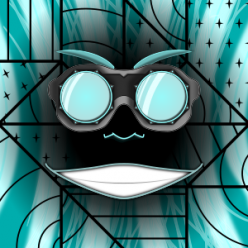
BOOK REVIEW: It Devours by Joseph Fink and Jeffrey Cranor

written by David Steffen

It Devours is a standalone tie-in novel based in the universe of the Welcome to Night Vale podcast and the Welcome to Night Vale novel, released in October 2017 by Harper Collins.

Nilanjana Sikdar is a scientist and a member of Carlos’s team in Night Vale, which Carlos calls the most scientifically interesting town in the world.  The team performs very important experiments, such as making machines that go flash and then bang, or measuring the effects of being disappointed in potatoes.  Nilanjana does experiments that involve growing bacteria.

Disaster strikes in Night Vale.  Not that it’s… all that unusual for some kind of disaster to strike, mind you, but this is a very mysterious disaster which no one understands.  Giant holes have been opening up and swallowing random bits of town, and the local chapter of the Church of the Smiling God is rumored to be responsible.  Carlos tasks Nilanjana with investigating the phenomenon to find out what is causing it and how to stop it.  On her first visit to the church, she meets Darryl, one of the church’s most committed members and strikes up a… friendship?  Or is it a romantic relationship?  Or, wait, maybe it’s all just a pretense, there’s something weird about Darryl and the way he smiles…

It Devours continues the oddball comedy horror that the Welcome to Night Vale podcast and prior novel are known for, and it does a great job, as ever.  Like the prior novel (and unlike the podcast) it does take the form of a more traditional narrative arc instead of being the shapeless semi-plotted form that the podcast takes.  You don’t need to have listened to any episode of the podcast, nor read the prior book, to enjoy and understand this one, though you might miss a small amount of in-jokes.  This one takes on one of my favorite topics, where science meets religion, with our two main characters being a scientist and a religious devotee, and has some interesting thoughts on the subject.

Also, I don’t often think much about book design besides just cover art, but this has a really eye-catching book design with the bright yellow cover, the purple-edged pages, and the toothy inlay.

It is eligible for the Hugo and Nebula awards this year (and is on my personal ballot for each).

GAME REVIEW: Super Mario Odyssey

written by David Steffen

Super Mario Odyssey is a new 3-D platform action game in the beloved and long-running Super Mario series of games, released by Nintendo for the Switch platform in October 2017.
The villain Bowser has kidnapped Princess Peach, for the bajillionth time, and he is going to try to force her to marry him.  It’s up to Mario to rescue her with his new sidekick companion Cappy, a shapeshifting and possessing ghost hat.  Mario throws the hat and it latches onto an enemy and transfers Mario’s control over the enemy’s body, so Mario can become a Goomba or a Bullet Bill or a variety of new enemies introduced for this game, giving him their abilities for enhanced attack or mobility.

Mario travels using a hat-shaped airship that is fueled by power moons (apparently a slight variant of the power stars collected in Super Mario 64?), so most of the game is spent trying to find power moons to build up enough power to reach new lands as Mario gives chase to Bowser, to try to catch them to stop the wedding.  Bowser has also hired a band of mercenary rabbits to help with wedding planning, who mostly spend their time picking fights with Mario while Bowser escapes.

Not to overexamine a children’s game, but if this were not a beloved children’s franchise, and/or if the graphics weren’t so cartoony, I would think that people would be more bothered by the ethical issues here.  We have a hero who uses a ghostly familiar to possess the bodies of enemies and bystanders to put that other creature in the way of bodily harm for his own objectives.  I mean, obviously Bowser is a villain here, kidnapping Peach and trying to force her to marry him, but I think Mario might be more in the wrong than Bowser here, kidnapping stripping the autonomy from random apparently sentient (at least some of them) creatures and endangering them along the way.  If it weren’t such cartoony graphics, that would be straight up grimdark fantasy territory there.  It’s pretty messed up, if you think about it.

Visuals
The cartoonish look you’d expect for a modern Mario game.

Audio
I didn’t pay a lot of attention to the audio, so I guess it’s pretty much what you’d expect?

Challenge
I wish that the bulk of the game were somewhat more challenging.  I breezed through quite easily, collecting enough power moons without any particular effort by just interacting with anything that seemed to be a little bit unusual.  I think only one or two boss fights took more than one try, and the number of power moons you have to collect to get through the main quest of the game was not a major obstacle.  There are some things that you can unlock after the main quest that involve extra levels that are significantly more challenging than the main quest.  Those are difficult enough to be challenging, but even then much of the “challenge” is more frustration over very long levels without save points so that you can play perfectly for twenty minutes but then misstep into lava and then you have to start over again.

Story
Super weak.  Recycling the same old Mario story.  Could we be done with the “Bowser kidnaps Peach and then Mario goes to rescue her”.

I mean, is it too much to ask to let Peach have some agency?  Why does she always have to be the object of the game?  We had Peach as a playable character in Super Mario Bros 2, and she’s been a playable character in Super Smash Bros games, can we give her a chance to be a playable character again?

I mean, you could even use the existing structure to try something new, like have Bowser kidnap her but then she as the playable character fights her way away from Bowser to save herself, maybe at some point meeting Mario on her way out and they becoming a fighting team or something, or Mario is player 2 of a multiplayer game or something.  I don’t know, I feel like the Mario story team could find something new after decades of Mario games.

Session Time
As with any Switch game, easy to sleep and wake at will.

Playability
Simple enough controls, with some of the complexity that is there seeming unnecessary (i.e., you have several different kinds of ways to jump slightly higher, what’s the point?).  There are some additional controls you get if you are using the dual handheld scheme, which means that if you prefer the snapped-onto-the-mini-screen handheld system you don’t get some of the functionality.

Replayability
The “main” quest of the game only requires you to find less than half the power moons that it takes to unlock harder areas, and when you beat the main quest it unlocks a bunch more of them.  So, there’s probably more of the game AFTER the main game then there is before.  If you want to find all the power moons and buy all of Mario’s outfits and unlock all of the areas and buy all of the collectibles, this will probably keep you busy for a while.

Originality
The plot is the same plot Mario’s pretty much always had.  The gameplay for most of the motion mechanics is pretty similar to all the others since Super Mario 64.  The main difference here is the hat sidekick and it’s posession mechanic.  Since you can borrow the bodies of enemies and friends along the way it does keep the gameplay a little fresher because new levels will make available new bodies for Mario to take over.  Some of my favorite games of all-time involve being able to change into different forms in some way or another to keep the gameplay fresh, so this is a sound design strategy.

Playtime
I finished the main quest in about 20 hours, and unlocked the harder areas in maybe another 10 without really major effort.

Overall
Same old Mario plot with familiar play mechanics when you’re in Mario form, but this game offers the new mechanic in the form of being able to “borrow” the form of many enemies (and friends) in order to mix up the gameplay and allow new abilities to experiment with.  The game is not very challenging, so experienced gamers may be disappointed by lack of difficulty.  And in my opinion it doesn’t have the novelty and awesome level design that Super Mario Galaxy 1 and 2 have because of the weird gravity mechanics.

Not a bad game unless you’re an experienced player looking for a real challenge. $60 for digital download from Nintendo or physical cartridge from various retailers.